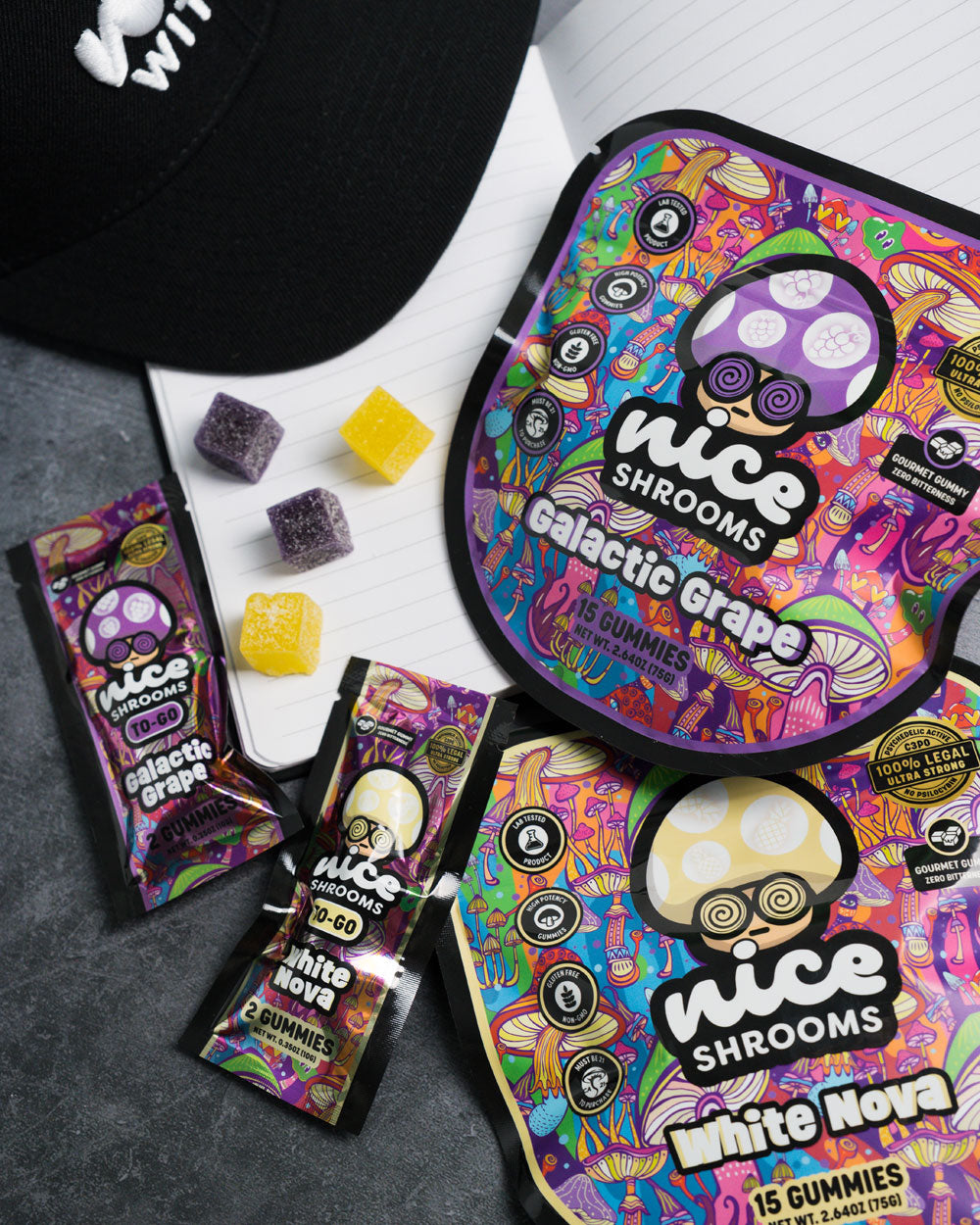

Traveling with THC Gummies in 2026: What's Actually Safe, What's Risky, and What to Do Instead
|
|
Time to read 4 min

|
|
Time to read 4 min
Let's keep it real: traveling with THC gummies in 2025 is not as simple as tossing a bottle in your backpack and calling it a day. Even when your gummies are hemp-derived and marketed as "federally compliant," you can still run into problems depending on where you're going, how you're traveling, and what the local laws look like when you arrive.
The safest move for most people is straightforward: don't travel across state lines with THC gummies. Instead, buy legal products at your destination, enjoy them responsibly, and avoid bringing anything back through airports or across borders.
Yes, that's the boring answer. But boring beats a stressful conversation with airport security or a local officer who interprets your product differently than you do.
Cue the dramatic "dun-dun-dun!"
Below is a practical guide to help you make smarter choices in 2026, whether you're flying, driving, or planning an international trip.
Here's the fast rundown before we get into the details:
In this article, we're talking about gummies commonly sold in the hemp marketplace. These often include cannabinoids like Delta-8 THC, Delta-9 THC (within hemp thresholds), THCa, THCp, and blends designed for stronger effects.
If you're exploring options at home (not in transit), Nice Leaf has a few standouts people love for different vibes.
A lot of confusion around traveling with THC gummies comes from the gap between federal hemp policy and state-level enforcement.
Since the 2018 Farm Bill, hemp has generally been treated differently than marijuana under federal policy, as long as products stay under certain THC thresholds (commonly referenced as 0.3% delta-9 THC by dry weight). That opened the door for a huge wave of hemp-derived products.
States can still create their own restrictions - sometimes very strict ones. Some states limit certain cannabinoids, certain product types, or anything that can be considered "intoxicating," even if it's hemp-derived. That's a big issue: a gummy that's sold openly in one state can be treated as contraband in another.
So even if you believe your gummies are "legal," interstate travel can expose you to state-level penalties if your destination or a state you pass through) has different rules.
People often assume TSA is actively hunting for cannabis products. In practice, TSA screening is primarily focused on safety threats. But that doesn't mean you're automatically in the clear.
Here's the risk: if your bag is searched for any reason (liquids, batteries, suspicious item shape, etc.) and an agent finds THC products, they may escalate it to local authorities depending on location and interpretation. And once local law enforcement is involved, you're dealing with whatever the local rules are - right there in that airport.
That's why, from a risk-management perspective, traveling with THC gummies through TSA is a gamble. You might fly ten times without an issue, and then on trip eleven, your bag gets pulled and your day goes sideways.
If you're traveling by car or bus, you don't have TSA - but you can still run into trouble with traffic stops, searches, differing state laws.
Key thing to understand: crossing state lines is where the risk spikes.
If you're driving through multiple states, you're potentially passing through places where your gummies are treated very differently. Even if you never plan to consume them during the trip, possession rules can still apply.
If you ignore everything, at least do this:
This won't make something legal if it's illegal; but it may reduce confusion and lower the odds of misunderstandings.
Most of the same logic applies: policies vary, enforcement varies, and crossing into restrictive jurisdictions creates risk. If your route crosses state lines, treat it like a road trip in terms of planning.
If traveling with THC gummies domestically is complicated, international travel is a whole different level of "not worth it."
Many countries have strict drug laws, and "but it's hemp" is often not a defense that matters in the moment. Even with a small amount of THC products can lead to serious legal consequences abroad.
If you're leaving the U.S., the simplest guidance is: leave THC gummies at home.
If you want the safest, lowest-stress approach, here are the options that make the most sense.
This is the best move for most travelers. Find a reputable shop where you're going, buy products that are clearly legal there,
Yes, if it is a standard 5V adapter. Avoid ultra fast chargers unless the brand specifies support.
Skip the hacks. If there is no USB-C port, it is not meant to be charged.
Usually 3 to 4 hours, sometimes less if the hardware supports faster input.
Some devices allow it, although it adds heat and slows charging. if the manufacturer does not explicitly support pass-through, let it finish charging before you puff.
In 2026, traveling with THC gummies is less about what you believe is legal and more about how laws are written, interpreted, and enforced where you happen to be standing.
If you want the lowest-risk approach:
That's how you keep your trip about good times - not legal headaches.
Disclaimer: This article is for general informational purposes only and does not constitute legal advice. Always check current local laws and regulations before purchasing or traveling with hemp or THC products.

Hemp Derived
Batch Traced By Origin

GMP Certified
Good Manufacturing Practice

Lab Tested
Tested By Batch

Fast Shipping
Ships within 1-2 days


