
What Is THCa? A Clear Guide to THC, Effects, and Legality
THCa shows up on labels, in conversations, and in the question everyone eventually asks: is it “real” weed? Fair question. The extra letter makes it sound like something entirely different, even though its connection to familiar cannabis is pretty direct. So, what is THCa?
Quick Answer: What is THC-A?
Here’s the short answer: THCa is a naturally occurring cannabinoid in cannabis and the precursor to delta-9 THC. Heat changes it into THC, which helps explain why heated THCa-containing products can feel familiar. But the molecule, the finished formula, and the legal category are three different things. Let’s clear those up without turning this into a chemistry lecture.
What is THCa
THCa stands for tetrahydrocannabinolic acid. You’ll also see it written as THCA or THC-A. It occurs naturally in the cannabis plant, including the resin-producing structures on its flowers and leaves. It isn’t a new name invented for a different kind of high. [1]
The “a” identifies its acidic form. In its unheated form, THCa is generally described as non-intoxicating, meaning it doesn’t produce the familiar THC high. That distinction matters, but it doesn’t make every product carrying the name non-intoxicating. Other ingredients and processing can change the picture.
Think of THCa as part of cannabis chemistry rather than a complete product description. A label tells you where to start asking questions; it doesn’t answer all of them.
THCa vs THC and why heat matters
THCa and delta-9 THC are closely related, but they aren’t interchangeable. When THCa loses a carboxyl group through a process called decarboxylation, it becomes THC. Heat speeds up that reaction. This is why the distinction between raw plant material and heated cannabis matters. [7]
That connection answers much of the “real weed” question. THCa is already part of traditional cannabis. Calling something a THCa product doesn’t place it outside the plant’s familiar chemistry.
It also explains why “non-intoxicating before heating” is not the same as “cannot get you high.” A heated product may deliver THC, while an unheated product may contain THC or other intoxicating cannabinoids already. The full formula matters more than the biggest word on the front.

Why the experience can feel familiar
When heating converts THCa into delta-9 THC, the resulting THC is the same molecule associated with the classic cannabis high. That’s the straightforward reason the experience can overlap. It doesn’t require a mysterious new effect or a promise that one product perfectly recreates another.
How it feels still depends on the amount, the other cannabinoids present, the format, and the person. Previous experience and individual biology matter, too. Some people describe pleasant changes in mood or perception; others experience anxiety, confusion, or discomfort. [2]
At Nice Leaf, we like a clear explanation more than a big promise. A strain name or “indica” label isn’t a personalized forecast. Neither is a friend’s review. Familiar ingredients can still produce an unfamiliar experience when the formula or format changes.
A vape and a gummy tell different stories
A vape involves heating, so THCa conversion is relevant to understanding it. An edible is different: swallowing unheated THCa should not be assumed to create the same effect as inhaling THC produced through heating.
Finished edibles may contain ingredients that were heated during manufacturing, existing THC, or additional cannabinoids. A “THCa gummy” name doesn’t establish which of those applies. Read the ingredients and matching laboratory report before attributing the entire experience to THCa.
Format affects timing as well. Edibles can have delayed effects and make it easier to consume more than intended. [2] A package total is also different from the amount in one piece. Those details are more useful than assuming that every item in a cannabinoid category works the same way.
Three of our favorite THCA picks
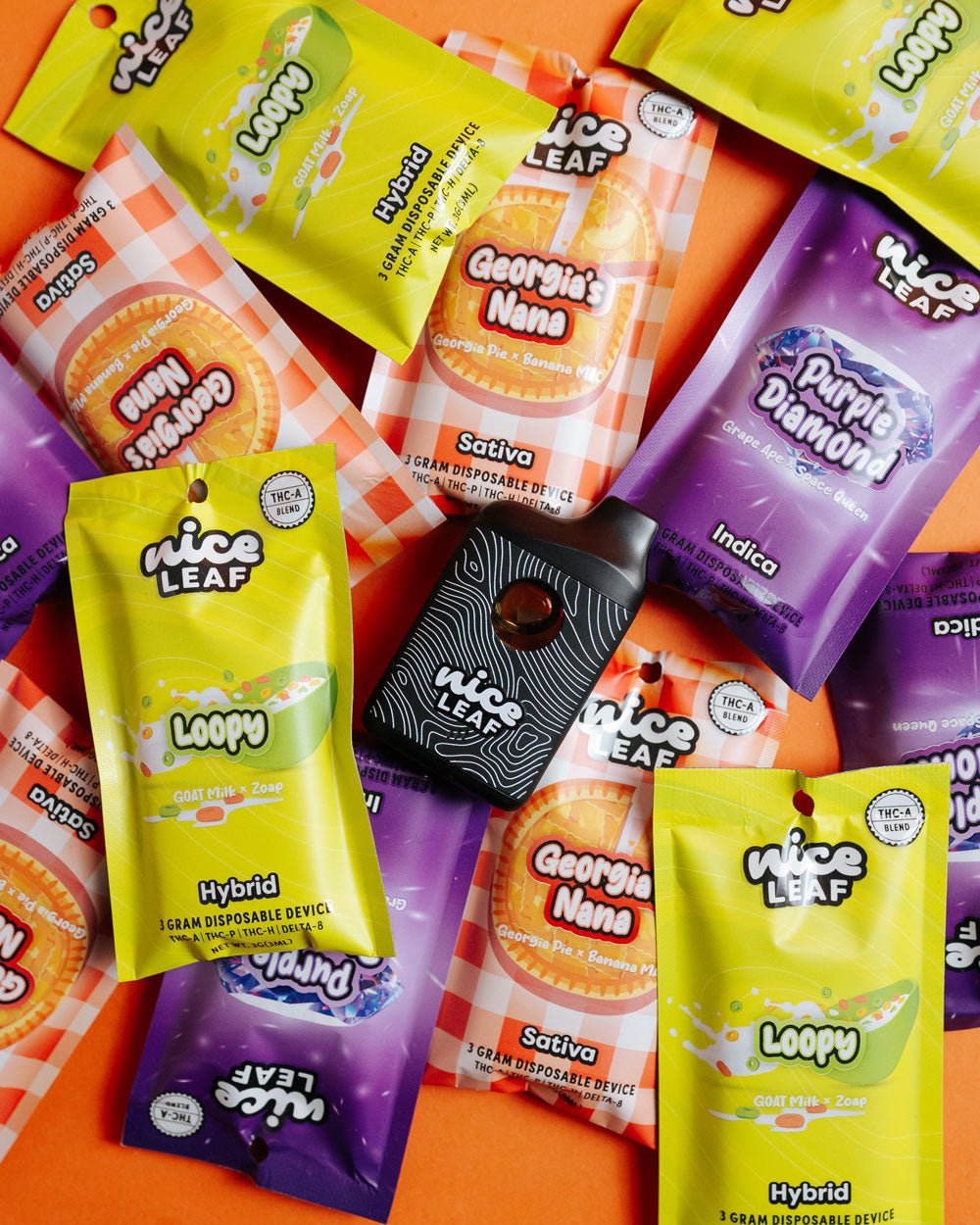
At Nice Leaf, the THCa lineup spans disposables and gummies, each with its own flavor profile.
Georgia’s Nana brings peach-pie notes to a 3-gram disposable, with Georgia Pie x Banana MAC behind the strain name. Purple Diamond takes a different direction: green apple and grape flavors paired with Grape Ape x Space Queen in the same disposable format.
On the gummy side, Sunny Halos has a citrus flavor profile. All three carry the THCa blend label, but their full ingredients, and the difference between an edible and a heated vape, remain part of the story.


Is THCa legal
There isn’t a nationwide yes-or-no answer based on the name alone. The 2018 Farm Bill defined hemp using a delta-9 THC threshold of no more than 0.3% by dry weight. That definition helped shape the hemp market, but it doesn’t settle every product’s legal status. [3]
USDA hemp-production testing already accounts for potential THC from THCa. [4] State rules and finished-product requirements can add restrictions, so a low delta-9 result or “hemp-derived” label is not a universal permission slip.
There’s also a dated change to know about. As of October 2, 2026, key federal hemp-definition changes are scheduled for December 11, 2026, unless further federal action changes that timing. They include total THC counting THCa and a 0.4-milligram combined total THC limit per container for finished hemp-derived cannabinoid products. [5]
Check current official guidance where you live. A shipping policy, an old blog, or a product listing shouldn’t be your only source for a legal answer.
Read the label and the lab report together
A certificate of analysis, or COA, shows what a laboratory measured in the submitted sample. Start by matching the product and batch identifiers. Then look for THCa, delta-9 THC, and other listed cannabinoids, paying attention to whether amounts are percentages, milligrams per serving, or package totals.
For hemp-production testing, total THC considers both existing THC and the potential contribution from THCa. [4] That number describes chemistry; it doesn’t predict your personal experience or guarantee a product’s legality.
Check which contaminant tests were performed, too. A cannabinoid panel alone doesn’t establish that pesticides, heavy metals, or other contaminants were assessed. Nice Leaf’s lab reports are a place to look for documentation; make sure the report matches the item and batch you’re reviewing.
Keep the decision nice and informed
For adults 21 and older, understanding the basics is a good starting point. Don’t drive after using an intoxicating cannabis product, and avoid combining it with alcohol. [6] Keep products in their original packaging, securely away from children and pets.
So, is THCa “real” weed? It’s a real cannabinoid found in cannabis, with a direct connection to THC. The useful next question is what a particular formula contains, how its format changes the experience, and which rules apply. Know those details, leave the hype behind, and make the decision that fits you.


